
AN ỌKPARA HOUSE PROJECT
Living Masks
Tradition does not survive by standing still. It survives by continuing.
REIMAGINING THE MASK
Culture → Form → Making → Participation
Igbo masking traditions were never meant to remain fixed. Each generation received an inheritance and, through its own experience and creative impulse, carried it forward. The disruptions of the modern era interrupted much of this continuity.
This project begins with archival forms from an earlier period of Igbo masking—not as objects to reproduce, but as points of departure.
Using contemporary digital tools and low-polygon geometry, the masks are reimagined for the present. In doing so, the project returns to the idea of Omenka: an artistic tradition in which making, skill, experimentation, and process matter as much as the finished object.
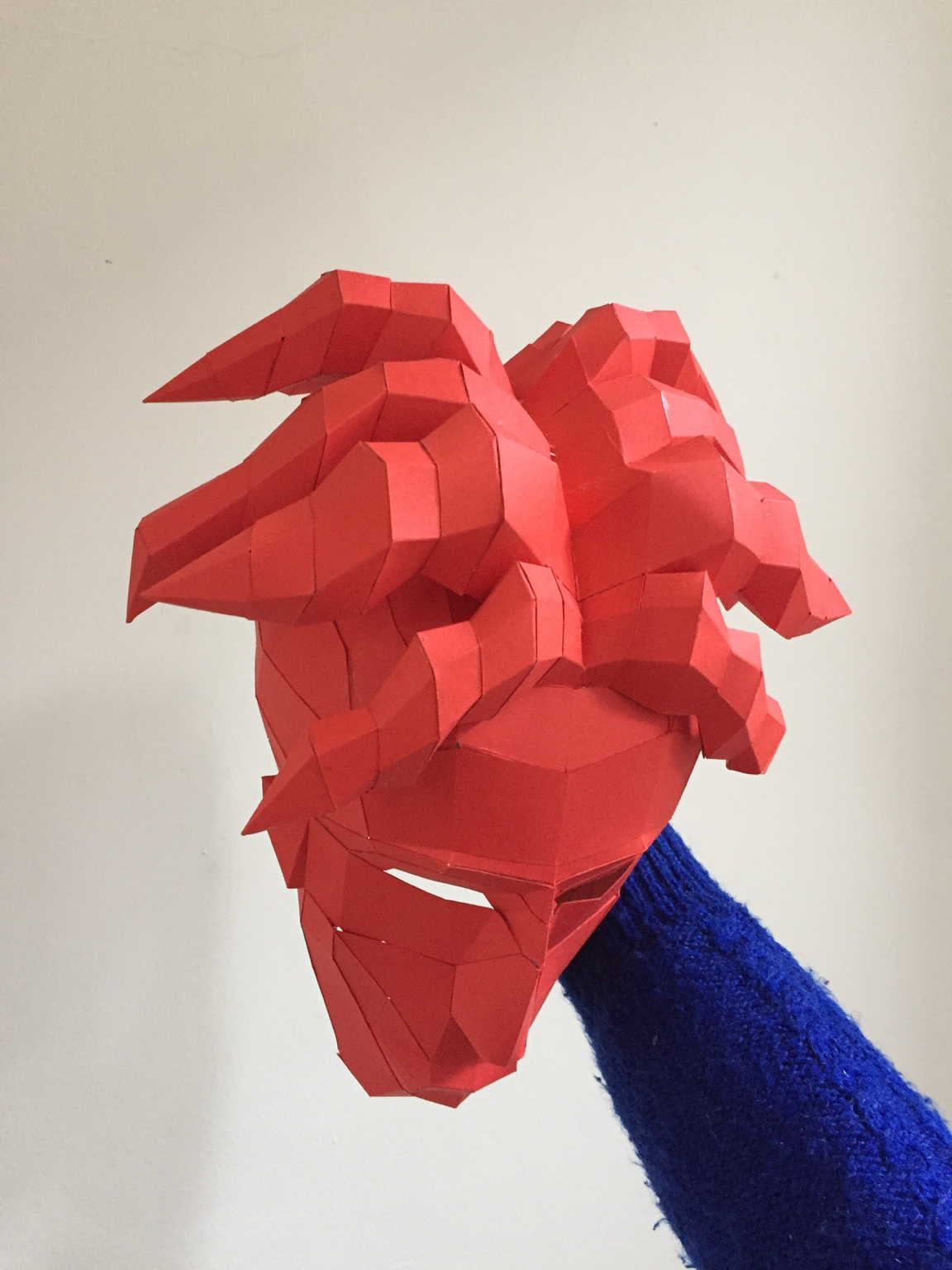
Here, the maker completes the work. Flat pieces of paper are cut, folded, joined, and gradually brought into three-dimensional form. Through play and participation, an inherited visual language is encountered anew.
The choice of paper is deliberate. Where earlier masks emerged from materials of their time and place, paper becomes a material of ours—accessible, transformable, and ultimately able to return to Ani, the earth.
This is not an attempt to recreate the past.
It is an invitation to continue it.
RECLAIMING THE PRESENT
The mask is not an antiquity.
Much of African cultural production has been framed through a Western museum narrative that fixes it in a distant past. Removed from the societies that made it, the mask becomes an ethnographic object: protected, classified and approached primarily through the authority of institutions elsewhere.
That framing creates a psychological distance between a people and their own inheritance. It can make cultural forms appear solemn, inaccessible or already complete—as though the right to reinterpret them disappeared with the historical moment in which they were collected.
A DIFFERENT PROPOSITION
Our cultural inheritance is not a sealed archive. It is material with which we can think, play and create again.
FROM HAND TO MACHINE
New tools. Continuing authorship.
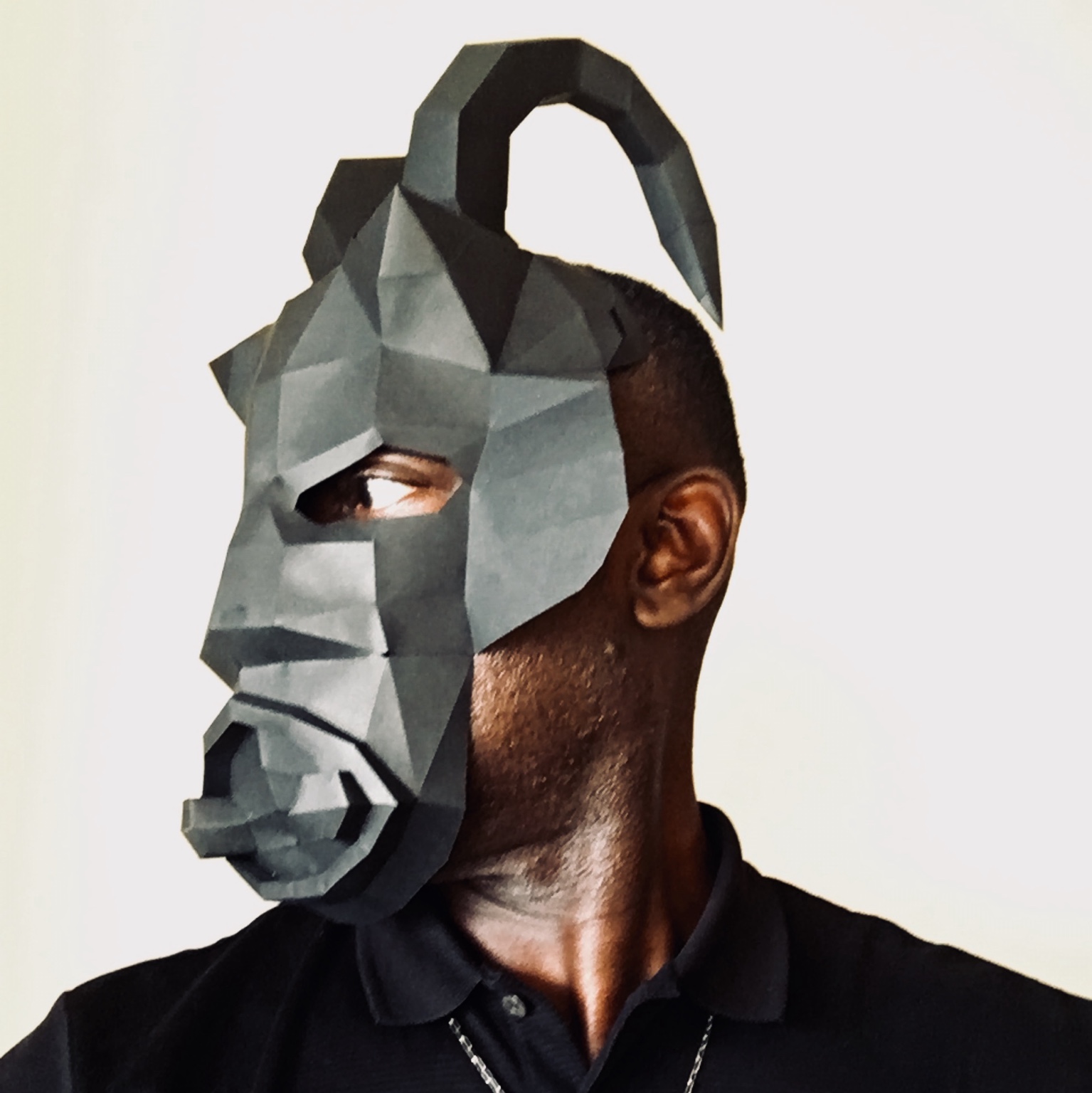
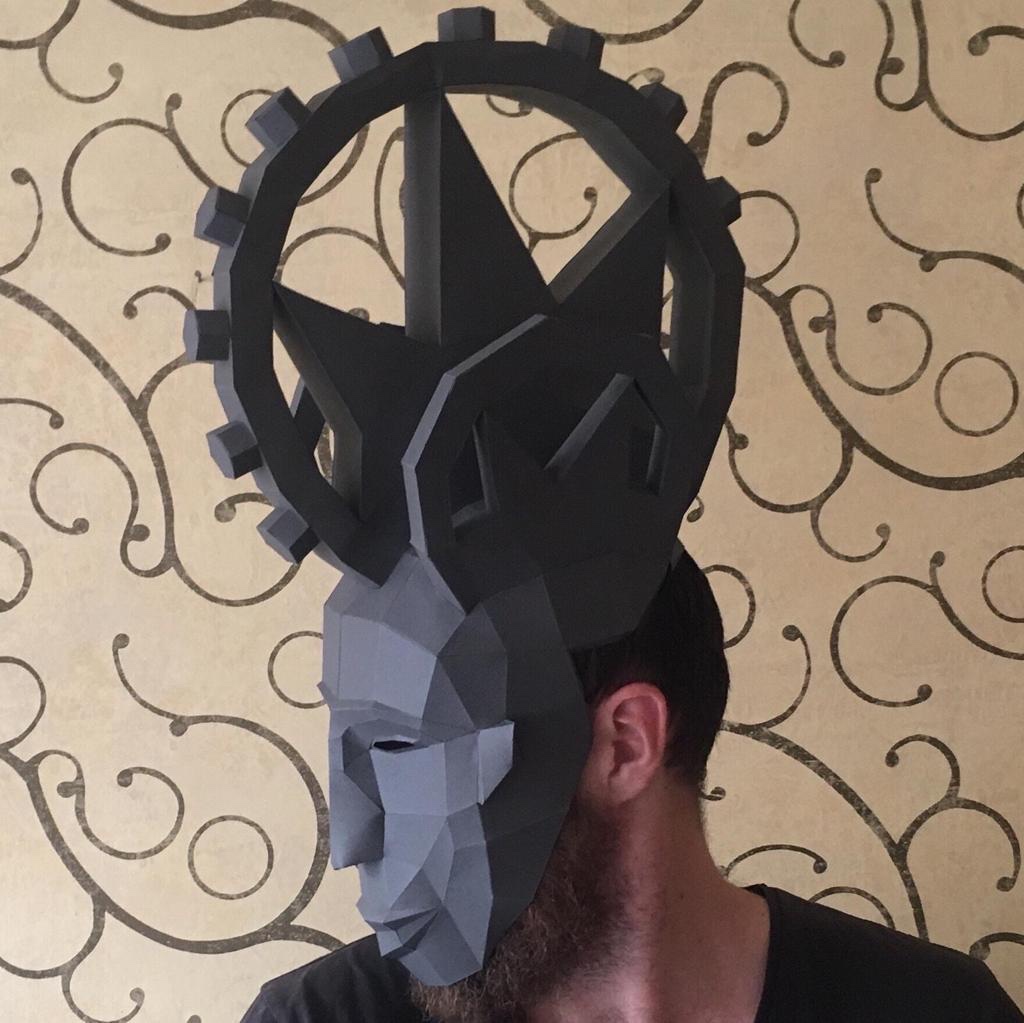
The work begins through direct experiments in geometry, silhouette and wearability. Folded prototypes make an idea immediate: the mask can still meet a face, alter a presence and invite participation. Digital modeling and additive manufacturing then allow those studies to evolve into precise, repeatable forms, freed from expectations of material, scale and prescribed museum display.
FROM CULTURAL STUDY TO DIGITAL FORM
The form examined from every side.
The collaboration moved beyond surface appearance to examine the masks as structures of planes, volumes, projections and balance. Digital modelling made it possible to test multiple views, revise individual components and understand how each form would occupy space before physical fabrication.
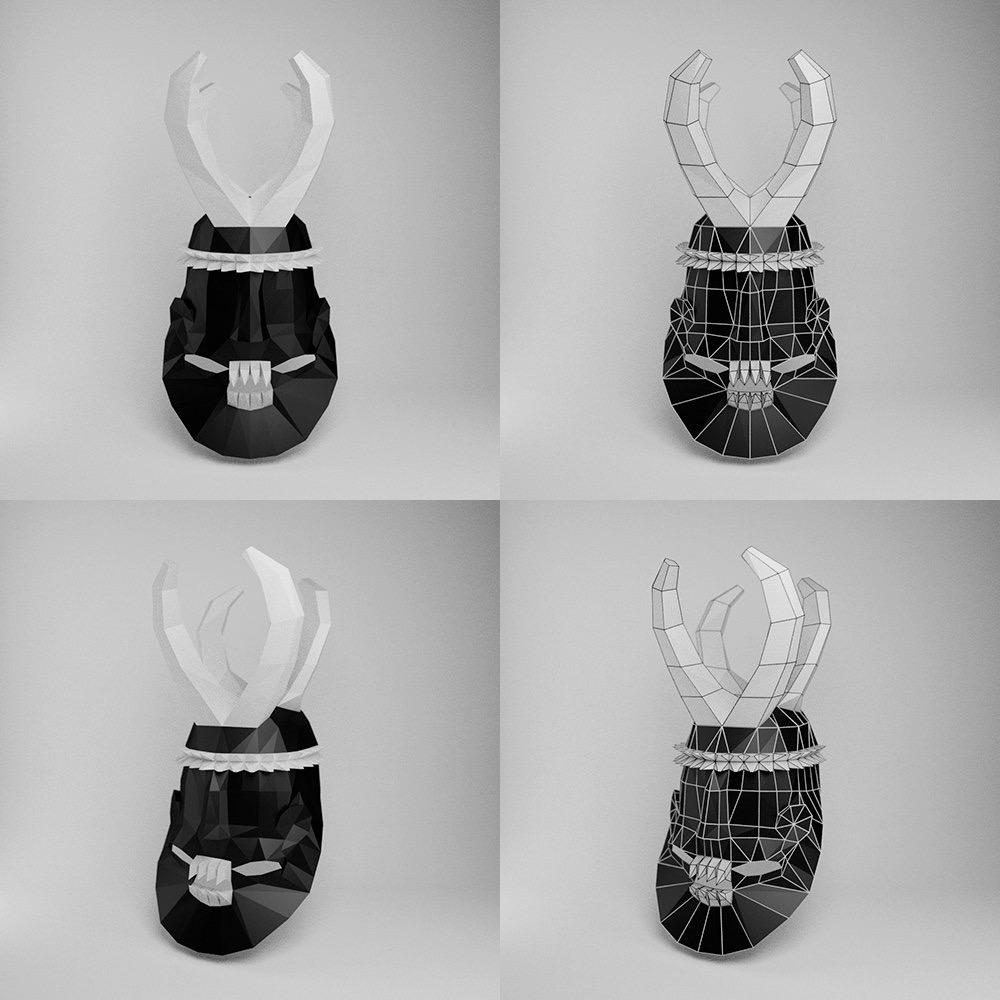
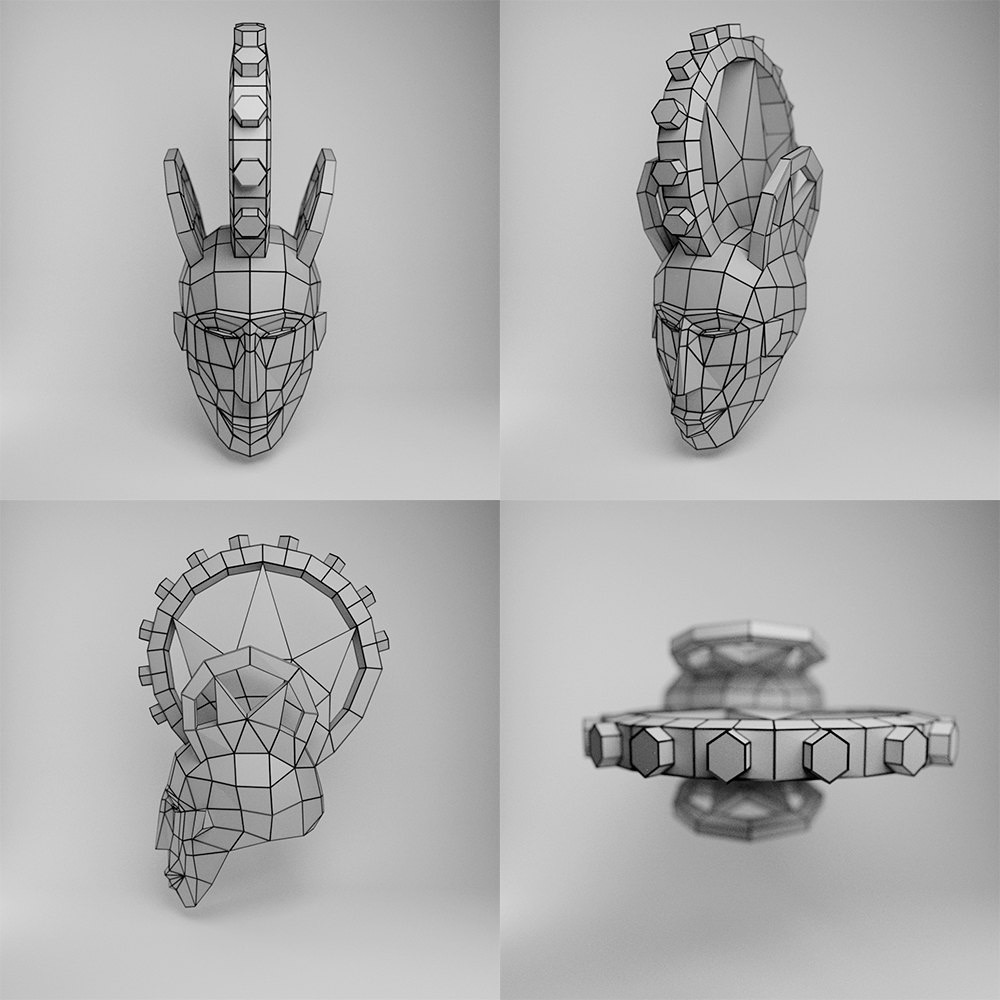
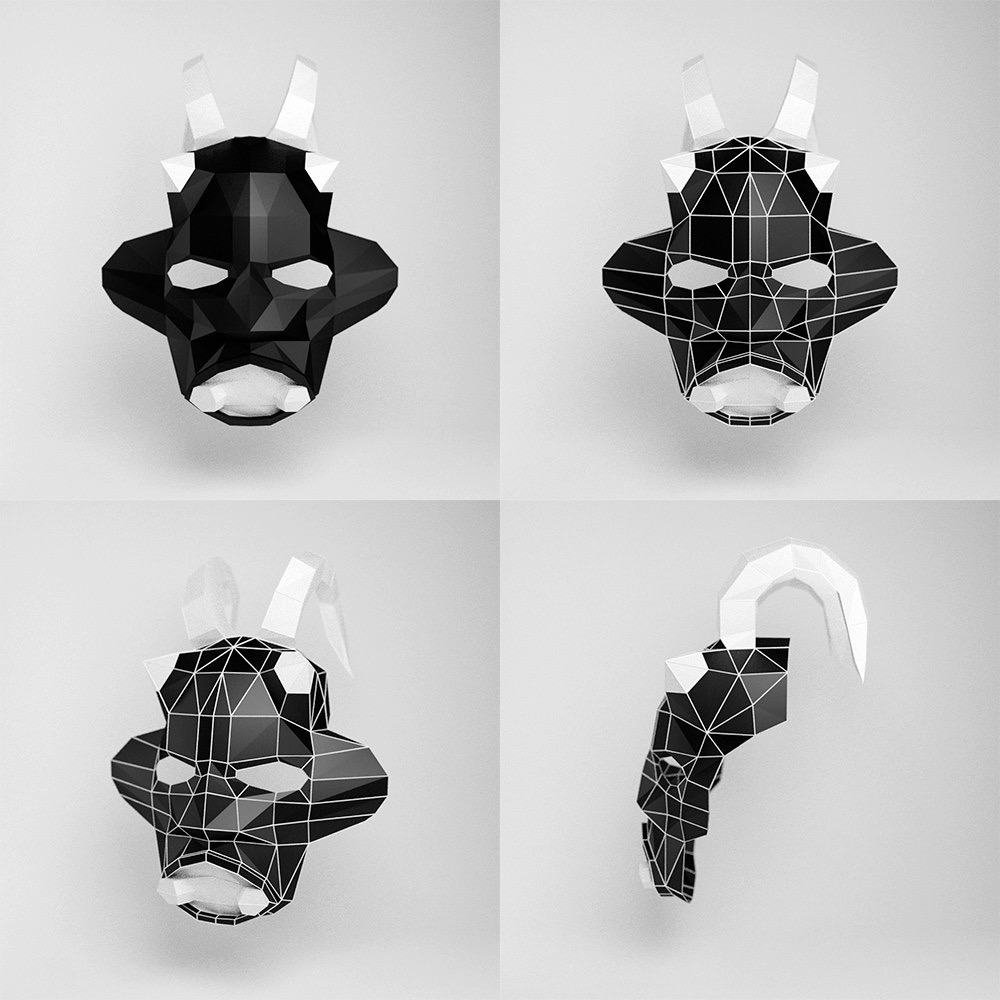
Digital model studies developed collaboratively by Obiora Nwazota / Ọkpara House and Studio66, Odessa, Ukraine. Creative direction and design reworking by Obiora Nwazota.
STUDY · ITERATION · RESOLUTION
Detail is where inheritance becomes design.
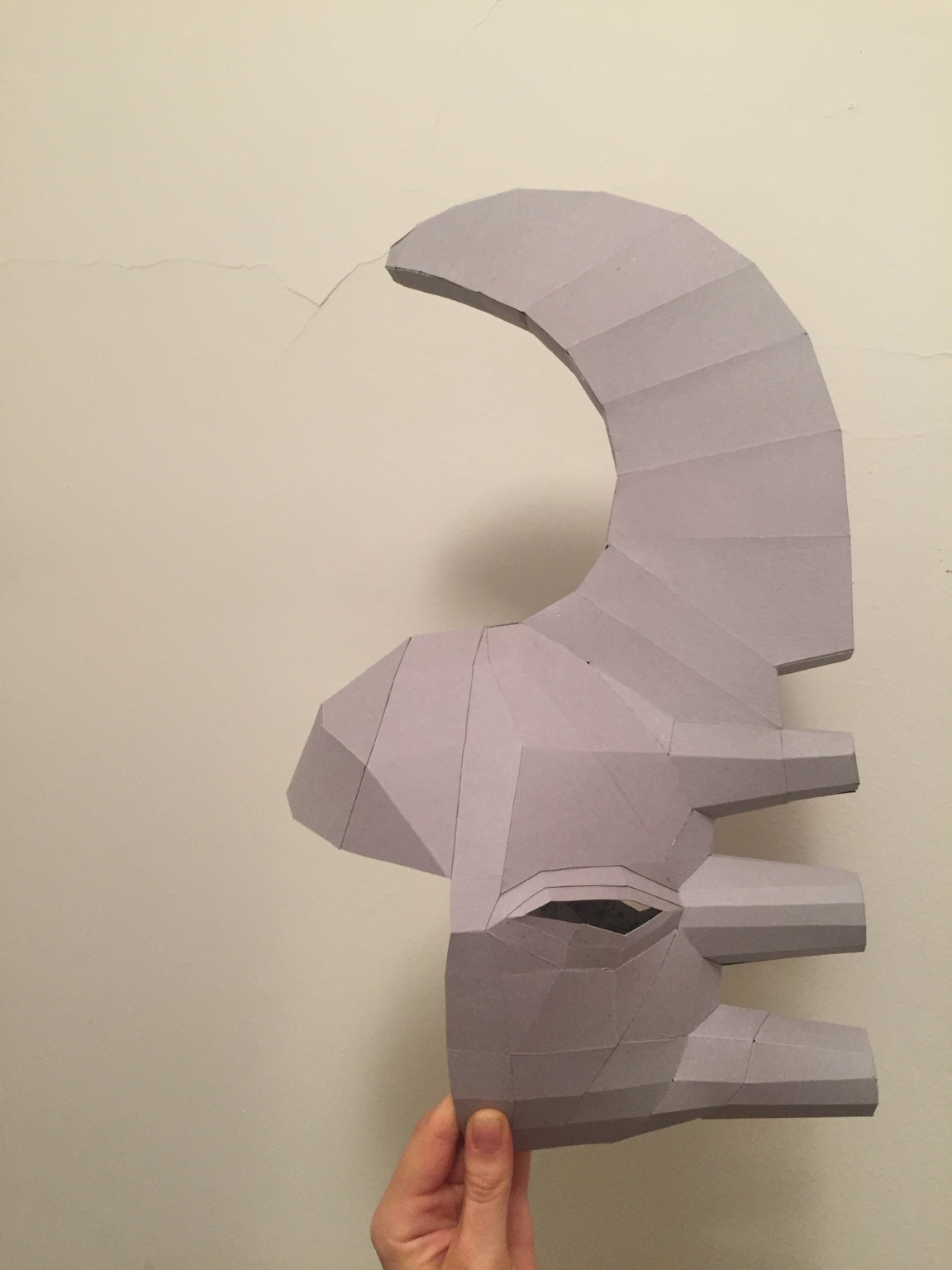
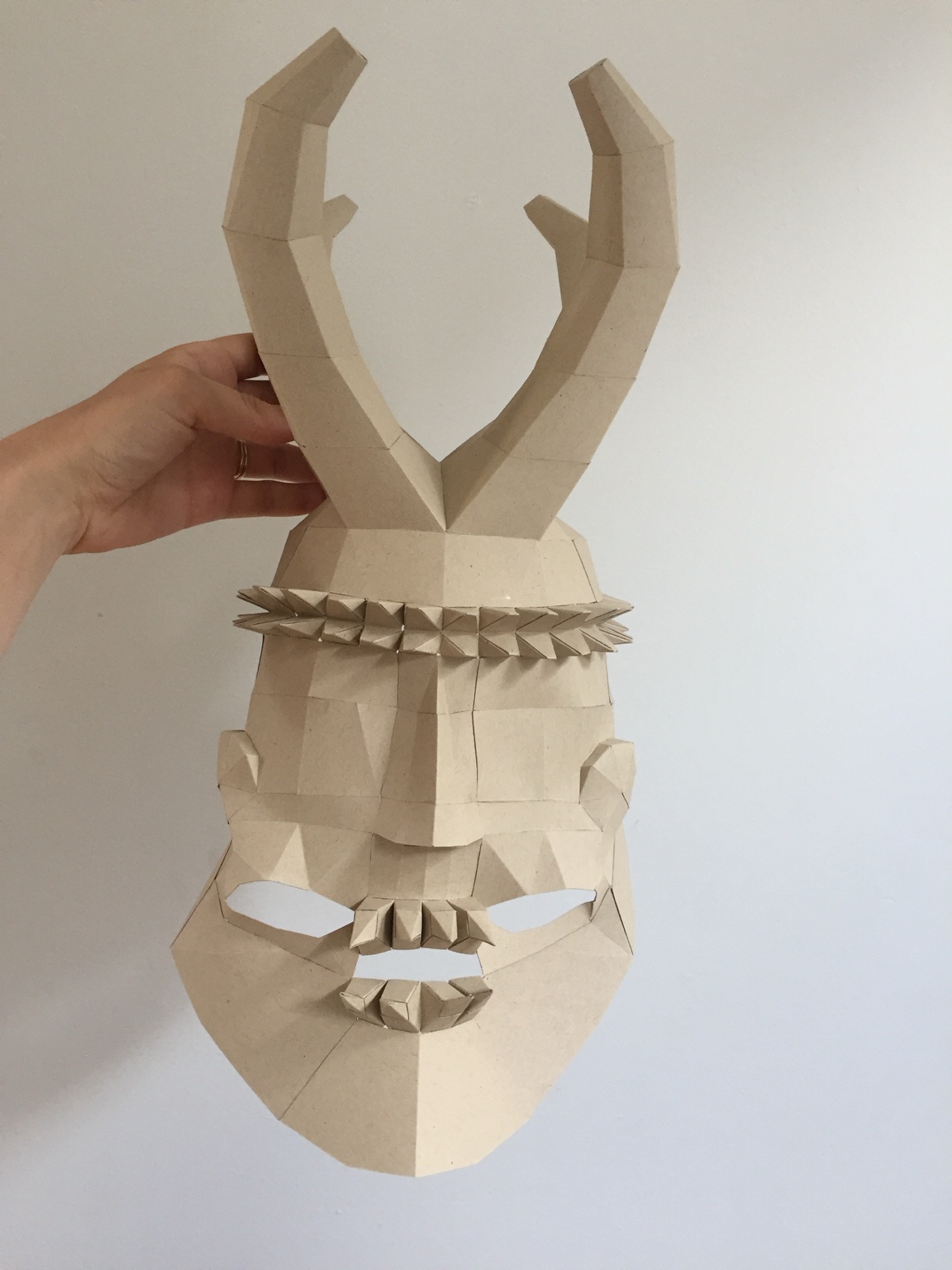
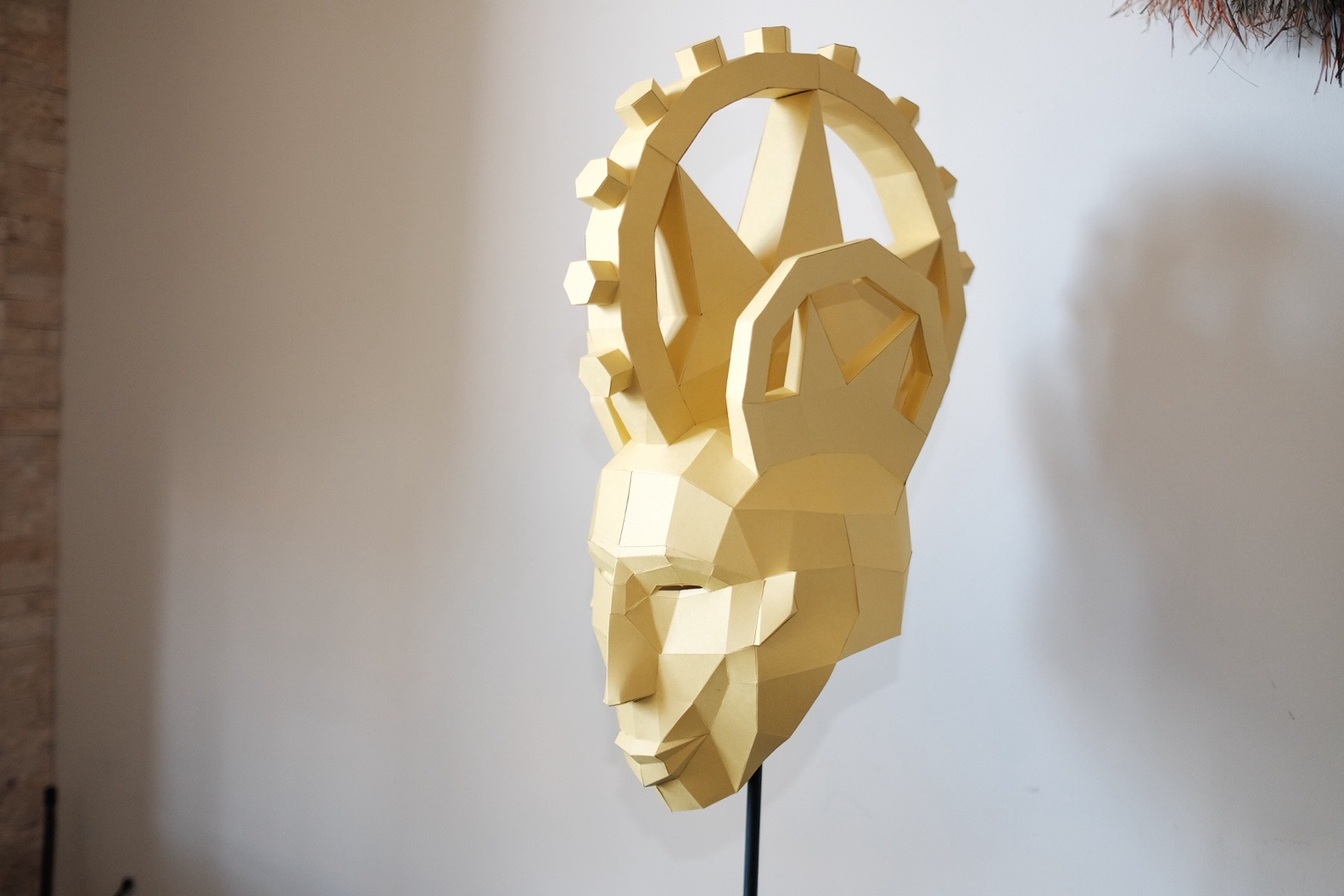
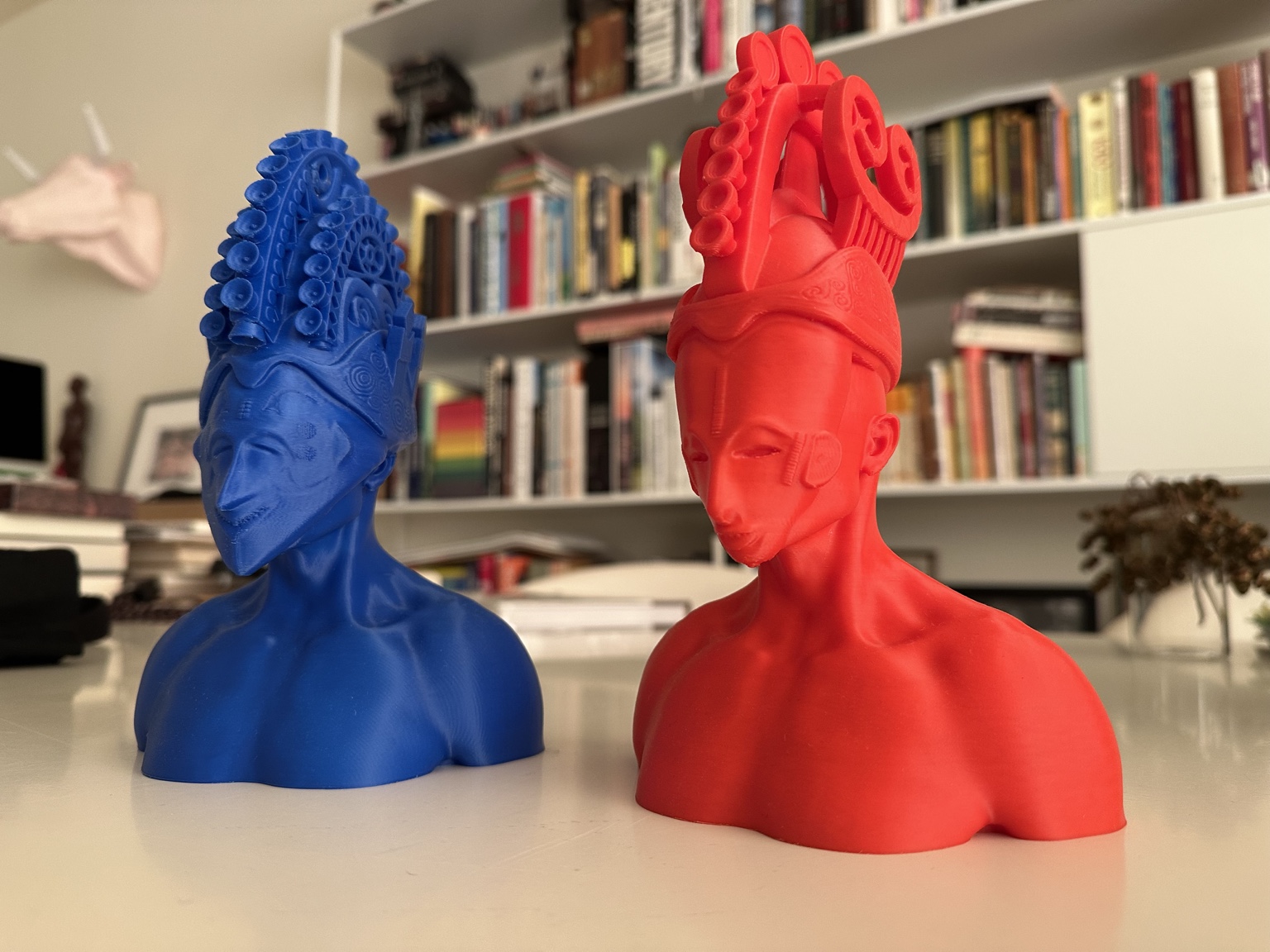
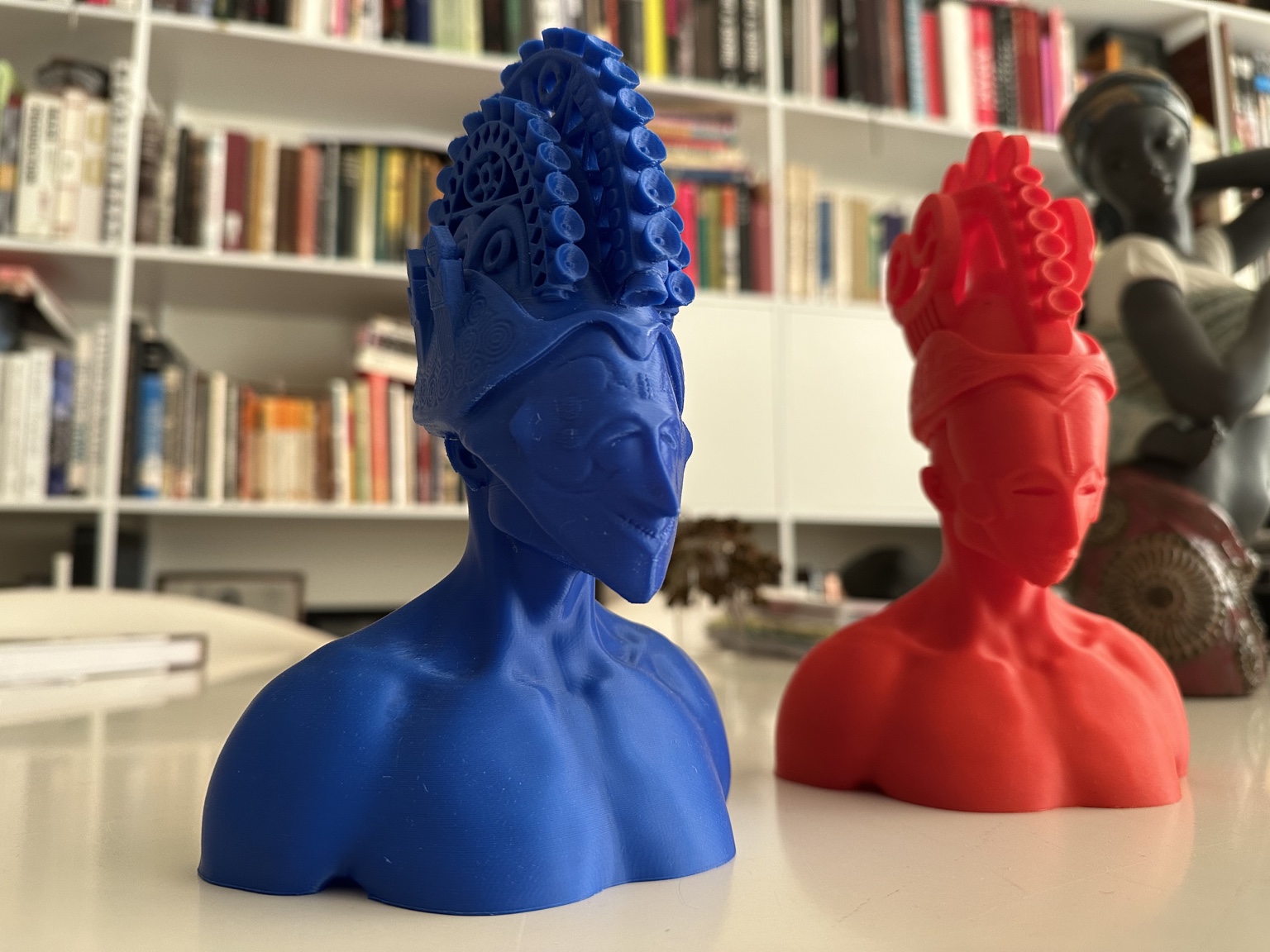
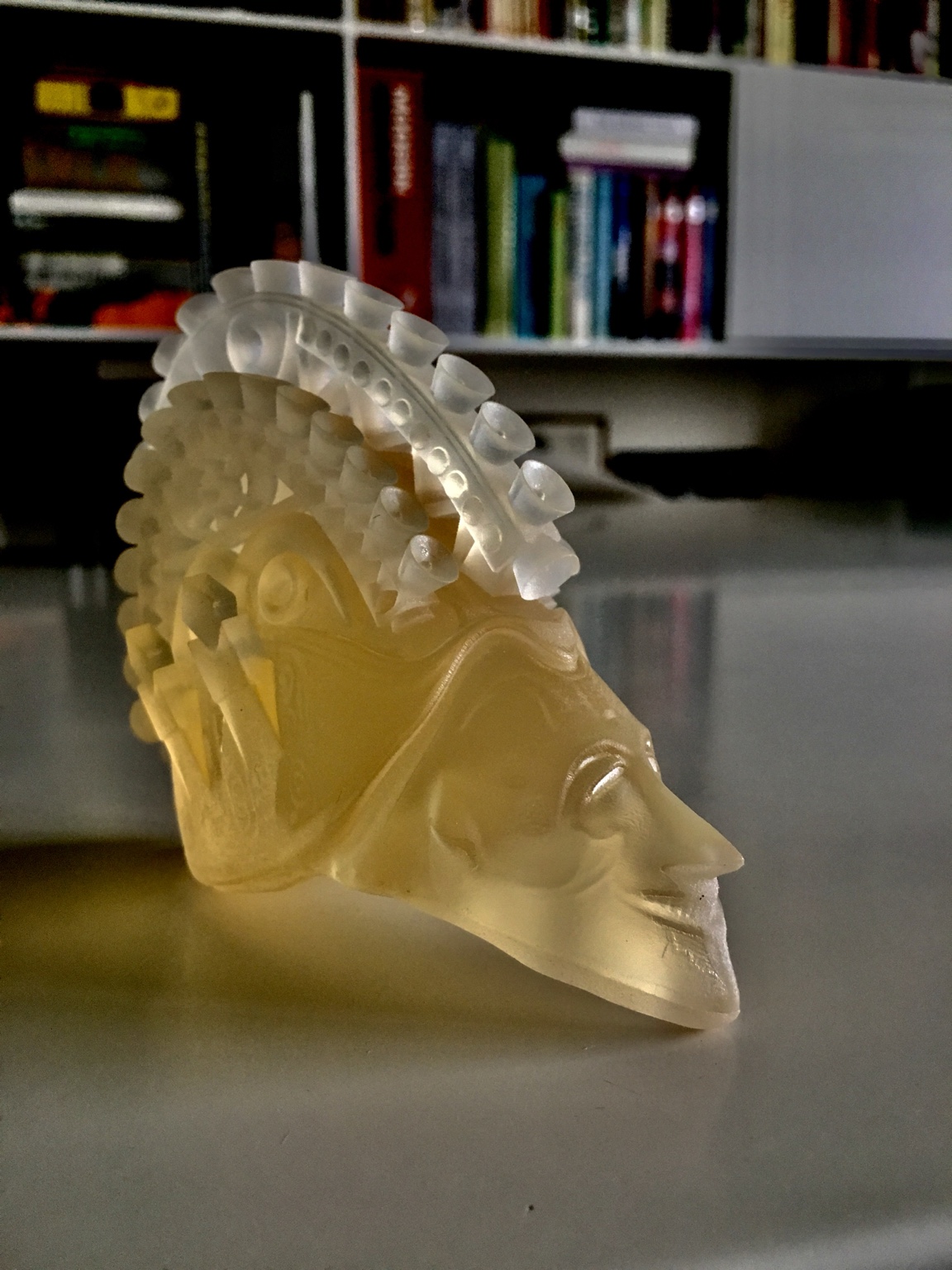
Separate studies isolate the formal questions: how a curve leaves the face, how horns and raised elements balance weight, how layered planes produce expression, and how the object maintains presence when it is no longer being worn. The completed gold study gathers those decisions into a freestanding contemporary mask.
INTERNATIONAL COLLABORATION
Across borders. Rooted in authorship.
Working between Ọkpara House and Studio66 in Odessa, Ukraine, the project brought cultural direction, personal reworking, digital modelling and physical prototyping into a collaborative process. The mask was studied as an architecture of planes, volumes and relationships, then translated between screen, hand assembly and contemporary fabrication.
International expertise serves the cultural proposition; it does not displace it. Design concept, creative direction and reworking were led by Obiora Nwazota through Ọkpara House, with digital modelling and technical development by Studio66.
- Design concept, creative direction and reworking
- Obiora Nwazota / Ọkpara House
- Digital modelling and technical development
- Studio66 · Odessa, Ukraine
- Development
- Collaborative
CULTURAL PRODUCTION
Serious in inheritance. Free in expression.
Contemporary technology does not diminish the cultural source. It demonstrates that the source remains generative. Color, translucency, repetition and new modes of production allow these forms to enter homes, studios and everyday conversation—without asking permission from the museum category that once contained them.
Recovery need not always be solemn. Cultural production can be rigorous and playful, rooted and experimental, deeply particular and immediately accessible.
A GIFT FOR LEARNING AND MAKING
Free to Download · Make · Teach
Living Masks are freely available to art teachers, schools, students, families, and paper-craft enthusiasts for educational, personal, and other non-commercial creative use.
Free access. One-time registration.
WHY WE REGISTER DOWNLOADS
To understand where the work travels.
Living Masks are designs that would ordinarily be offered for sale. Ọkpara House is making them available without charge so that teachers, students, artists, families, researchers and enthusiasts can make and share the knowledge.
A one-time email verification helps us document their circulation, understand who is using them and see the regions of the world they reach. It is not a purchase. Joining the Ọkpara House mailing list remains separate and optional.
Ọkpara House does not sell your information.
THE COLLECTION · FIVE MASKS · THREE CULTURAL FAMILIES
Make an inherited visual language tangible.
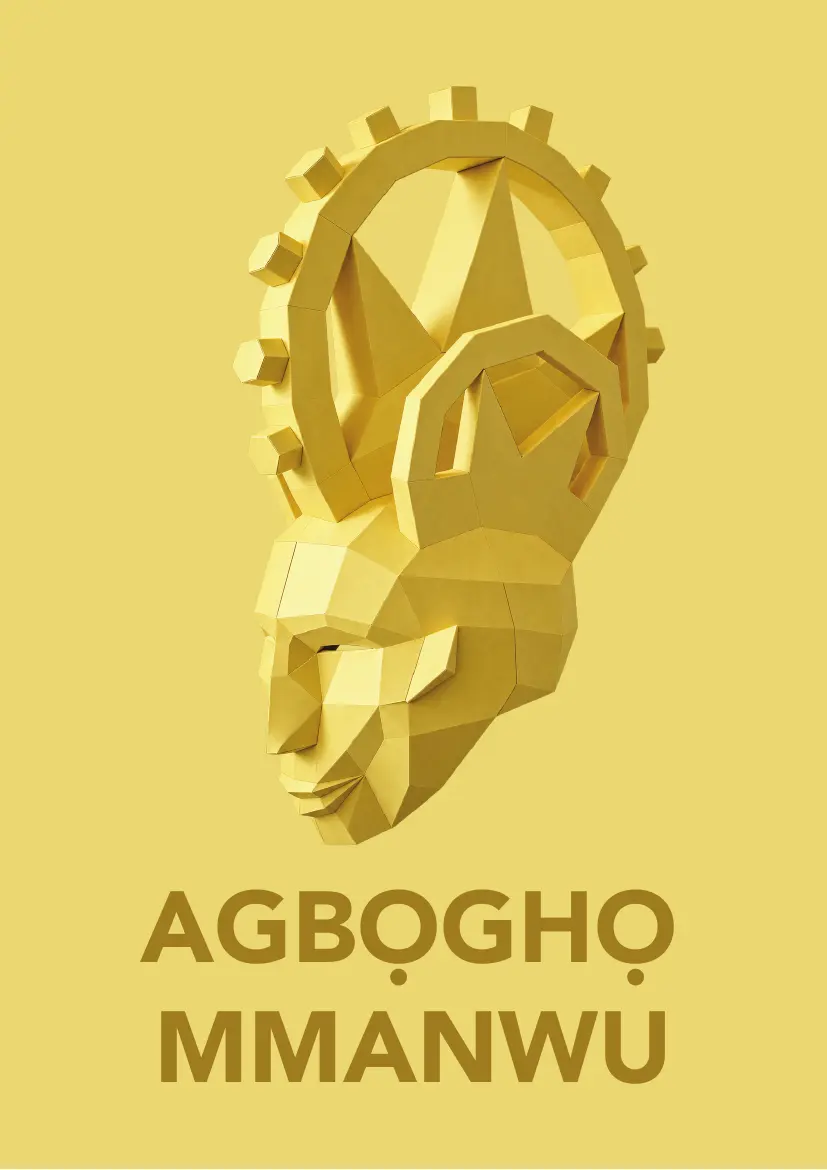
MAIDEN SPIRIT
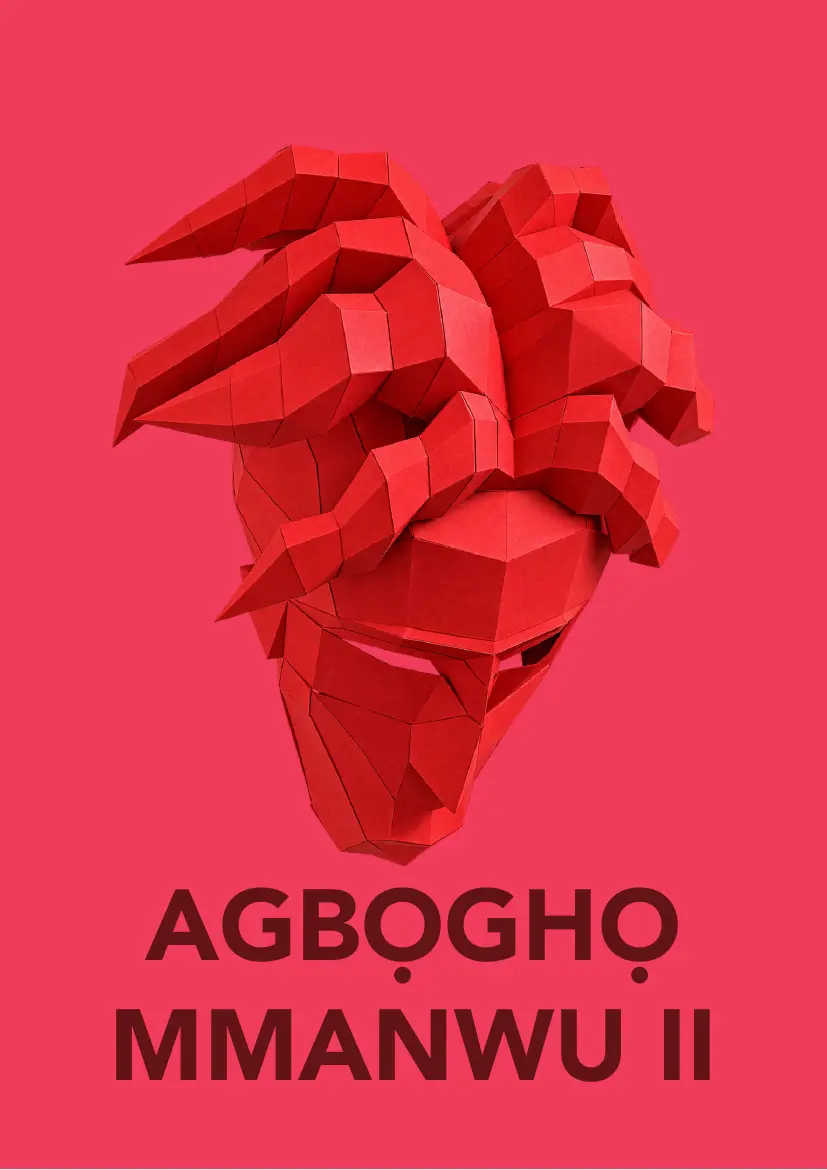
AGBỌGHỌ MMANWU / AGBỌGHỌ MMỤỌ
Agbogho Mmụọ, or Maiden Spirit, belongs particularly to the masking traditions of the Nri-Awka area of Igboland. Its delicate features—an elongated nose, small mouth, elaborate coiffure, and patterned surface—evoke an ideal of youthful feminine beauty understood not simply as physical appearance, but also as refinement of character.
Traditionally performed by male masqueraders, Agbogho Mmụọ appears at festivals, funerals, and other occasions of communal significance. The mask is characteristically rendered in white, a color associated with the spirit realm and purity.
Through beauty, movement, music, and performance, Agbogho Mmụọ transforms qualities valued by the community into a living presence.
THE FORMIDABLE SPIRIT
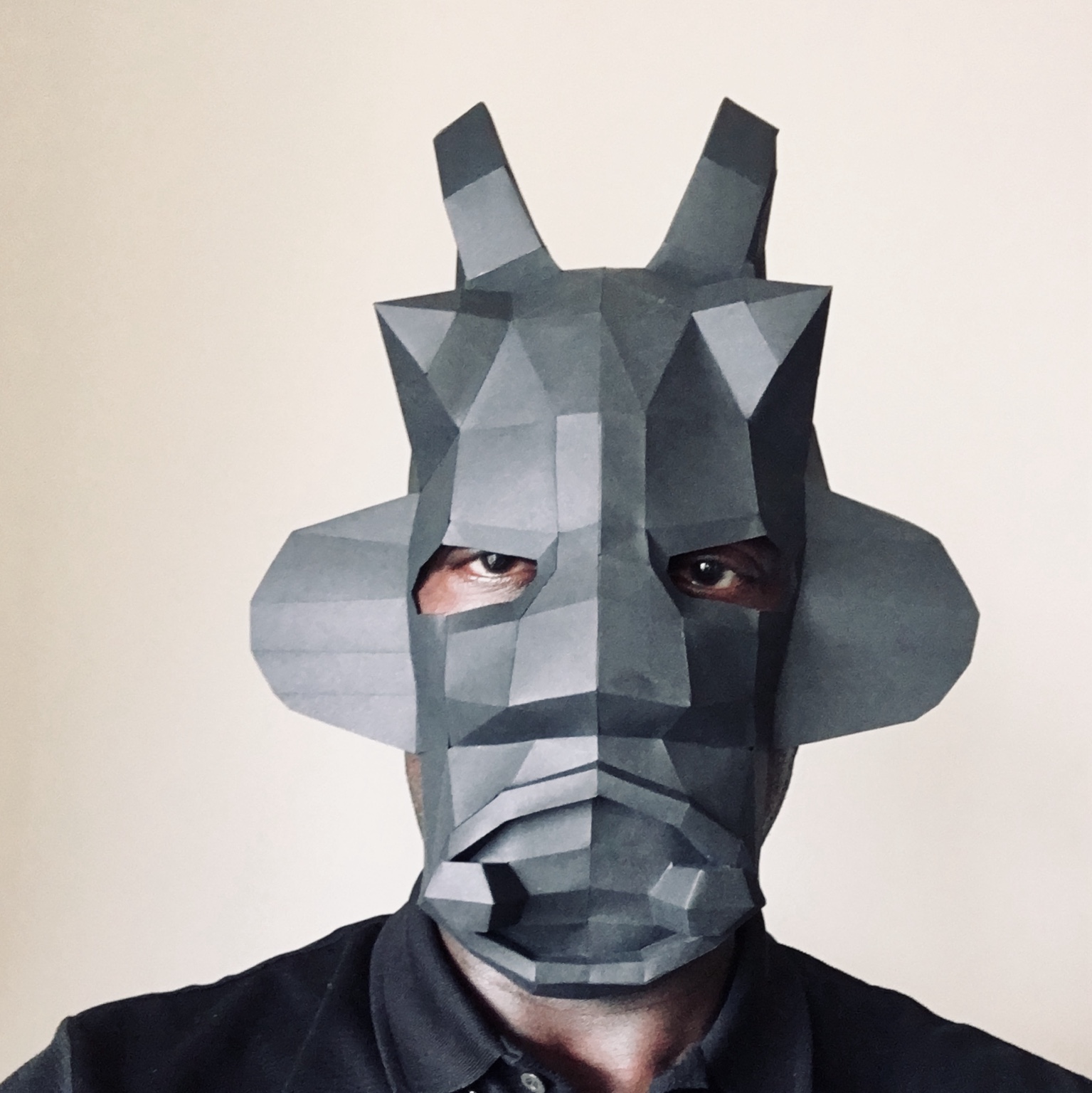
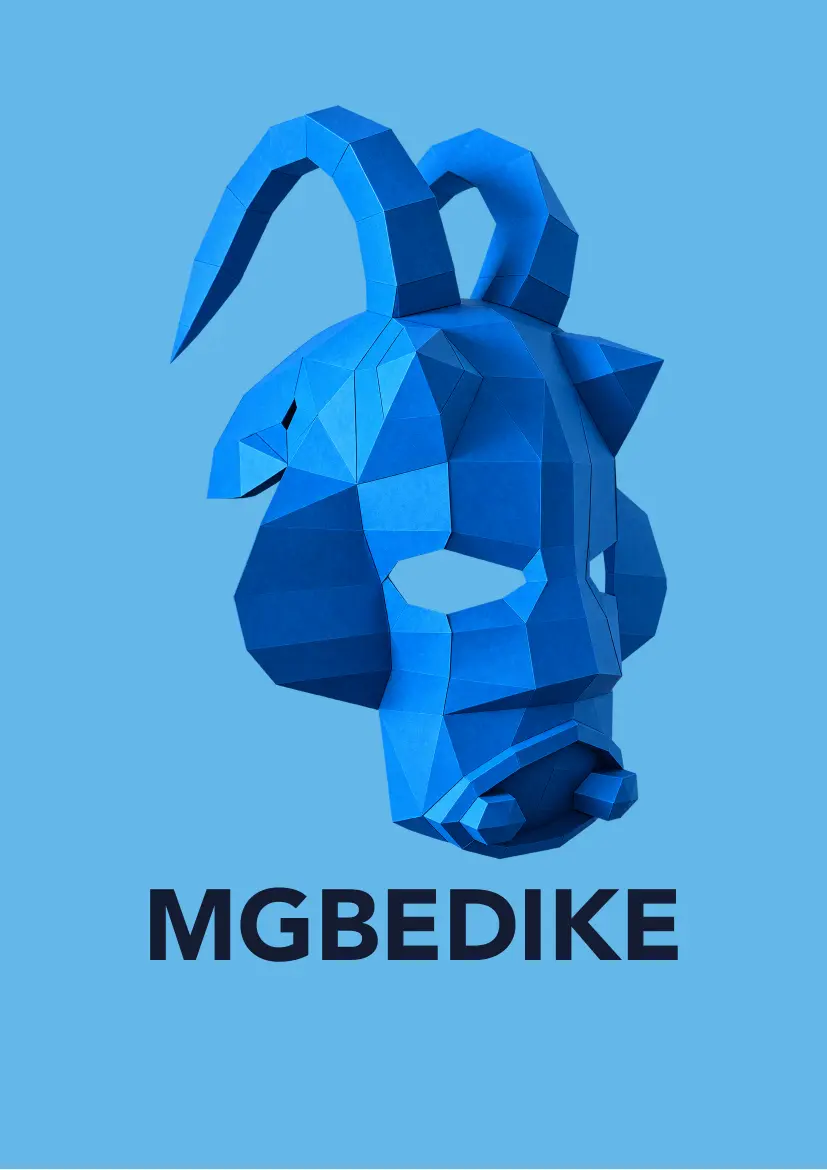
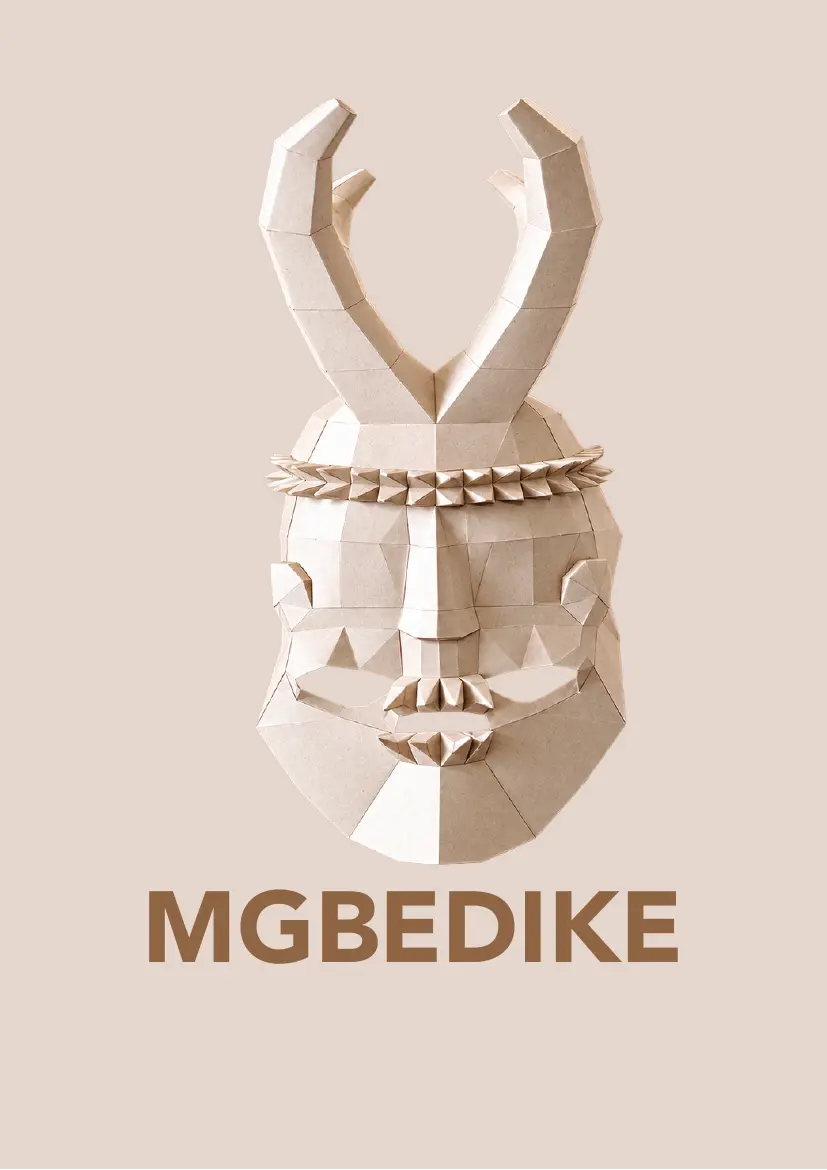
MGBEDIKE
Mgbedike belongs to a powerful family of Igbo masquerades associated with courage, bravado, mystery, and the formidable forces of the spirit world. Its dramatic horns, spikes, and aggressive features recall the strength and danger of wild creatures once encountered in the forests of Igboland.
Yet Mgbedike is neither entirely animal nor human. Its power lies partly in this ambiguity—a presence occupying the uncertain space between the familiar and the supernatural.
In character and appearance, Mgbedike offers a striking counterpoint to the grace and refinement of Agbogho Mmụọ: two very different ways in which Igbo masking gives visible form to unseen forces.
AFIKPO MASKING TRADITION
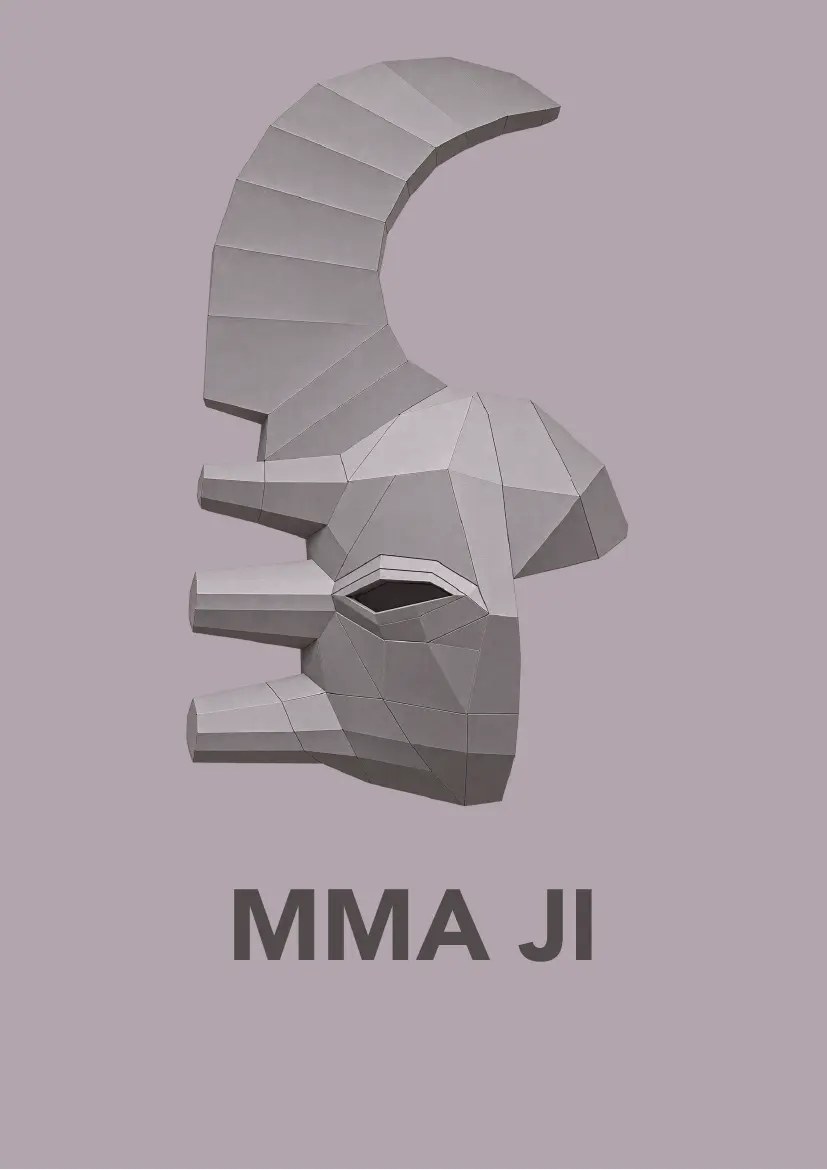
MMA JI
Mma Ji is one of the best-known mask forms of the Afikpo people of southeastern Igboland. Its distinctive name refers to the blade-like form rising above the mask, resembling a knife or machete—an implement inseparable from cultivation and life on the land.
Mma Ji appears within Afikpo masking traditions that bring together dance, song, theatre, satire, and social commentary. Performances may celebrate communal life while also turning a critical and sometimes humorous eye upon individuals and events within the community.
Its associations with cultivation, yam farming, ancestral strength, and communal performance reveal the mask as more than an object: it belongs to a larger institution through which society gathers, performs, remembers, and speaks to itself.
A CONTEMPORARY INTERPRETATION
These paper objects draw from the visual inheritance of Igbo masking. They do not recreate the living cultural and spiritual institution of masquerade.
USAGE & RIGHTS
Free for Personal & Educational Use
These paper mask designs are made freely available by Ọkpara House for personal, educational, and non-commercial creative use.
Teachers and educators are welcome to download, print, reproduce, and use the designs with their students in classrooms, workshops, art programs, and other educational settings. Paper-craft enthusiasts are equally welcome to download, make, display, and enjoy the masks for personal use.
Please do not sell the digital files or printed templates, redistribute or upload the files to other websites or platforms, claim the designs as your own, or use the designs to produce products for commercial sale.
If you would like to share the project with others, please direct them to Ọkpara House, where the original files can be downloaded freely.
The designs remain the intellectual property of Ọkpara House and are protected by applicable copyright and intellectual property laws.
Download. Make. Teach. Share the knowledge.
Please keep the designs free.
CREDITS
Project Credits
- Paper Masks
- Obiora Nwazota · Studio66 · Lucie Van der Elst
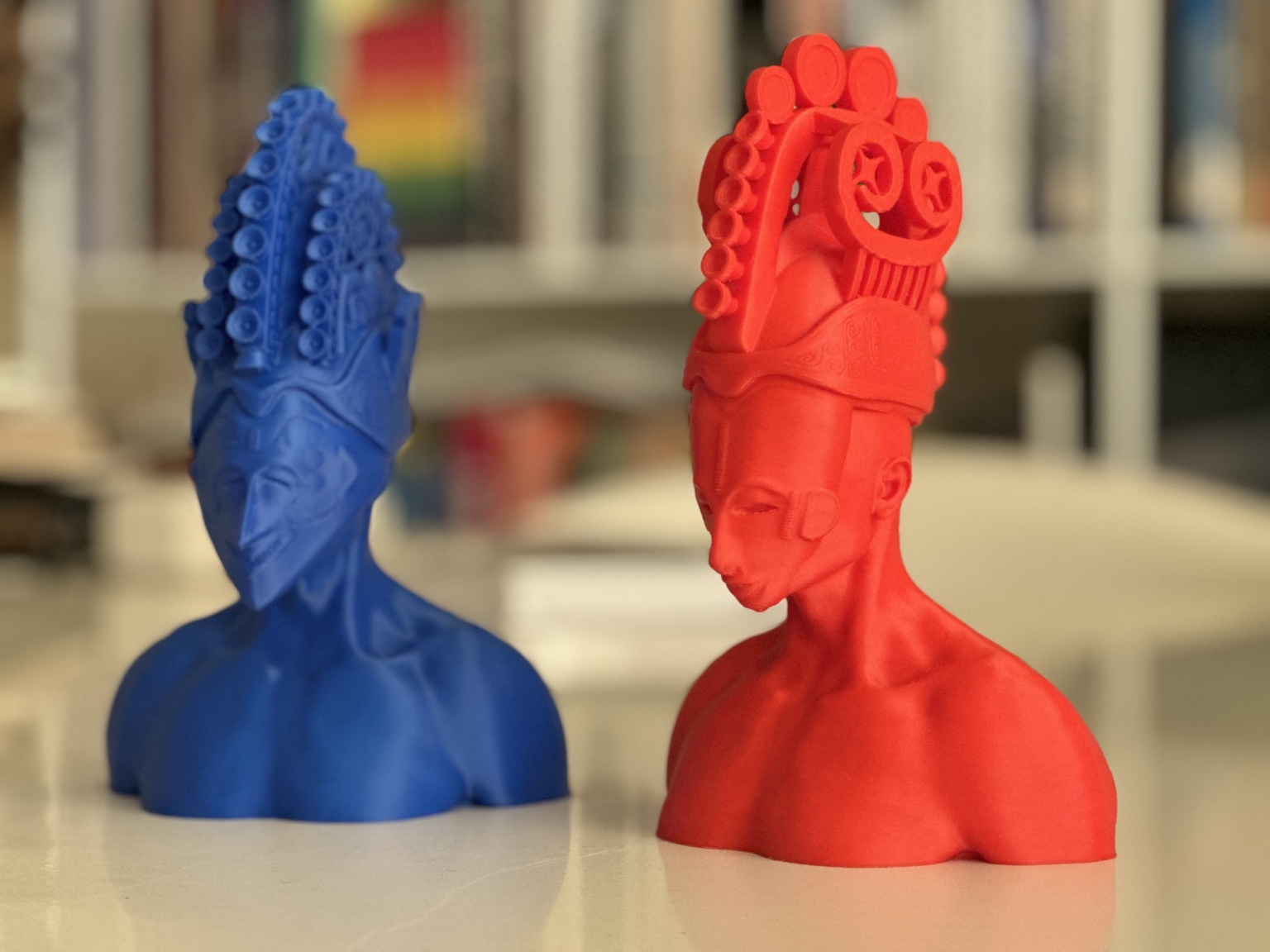
- 3D Mmanwụ Busts
- Obiora Nwazota · Studio66 · Mad Ad Agency, Latvia